Basic definitions in Pharmacology
Pharmacology: It is a paraclinical branch of medical science that deals with the study of medications/drugs in humans.
Drug: a chemical substance that alters biochemical and physiological changes in the human body. According to the WHO definition, a drug is a chemical substance used for the prevention, diagnosis and treatment of disease.
Pharmacoeconomics: it is a branch of pharmacology that analyses the cost of a drug therapy in a scientific manner.
Pharmacokinetics: means the journey (movement) of the drug inside the body, from its entry into the body to its exit out of the body.
Pharmacodynamics: The term Pharmacodynamics is concerned with the mechanism of action of the drug.
Pharmacovigilance: According to the WHO definition, pharmacovigilance comprises of detection, assessment, understanding and prevention of adverse drug events.
Routes of drug administration
The drugs are administered through enteral, parenteral, and topical routes. To provide site-specific and targeted drug delivery, drugs are administered through special routes called special drug delivery systems. The selection of the route depends on various factors, including patient comfort, the urgency of the situation, and the physical and chemical characteristics of the drug. In a patient with angina presenting with acute chest pain, the sublingual route (nitroglycerine) is preferred for immediate relief. In contrast, the oral route (tablet paracetamol) may be chosen to relieve headache or backache.
Classification
1) Systemic route: Enteral and parenteral routes.
2) Local/topical: drug applied topically in the form of skin ointment, liniment, ear drops, eye drops, vaginal pessaries, etc.
3) Special drug delivery system: transdermal drug delivery, liposomal drug delivery, insulin pumps, nanoparticles, etc.
Systemic Route:
- A) Enteral Route: Oral, Sublingual, and Rectal.
- B) Parenteral Route: Intravenous (IV), intramuscular (IM), subcutaneous (SC), intradermal, intra-arterial, intrathecal, etc.
Oral Route: It is the most commonly used route. Drugs in the form of tablets, capsules, solutions, or syrups can be administered through this route. For example, tablet paracetamol for fever.
- Convenient, readily acceptable, and cost-effective.
- Not useful in noncompliant, unconscious patients and patients with severe vomiting.
Sublingual Route:
The drug is placed under the tongue to be absorbed into the bloodstream. Example: Nitrates are used to relieve the pain caused by angina pectoris.
- Fast onset of action and bypasses first-pass metabolism.
- Not advisable for sustained drug delivery and for an unconscious patient.
Rectal Route: This route can be used to produce systemic or local effects.
- This route is intended for the local treatment of pain due to hemorrhoids. (E.g. Xylocaine Jelly).
- It is also used for systemic delivery. For example, diazepam suppositories are used to mitigate convulsions in pediatric patients.
- The route is not commonly acceptable to patients, as it causes inconvenience and embarrassment.
Parenteral route: This route reminds me of my school memories when nurses and the medical team arrived to give vaccines by intramuscular injection. Several of our acquaintances would flee, unable to overcome their apprehension regarding a needle prick.
Intravenous Route: The drug is injected into superficial veins as a bolus or infusion. It is the fastest way to administer IV fluids to a patient with dehydration.
- The route is useful in an unconscious patient and in emergencies.
- It is more suitable for patients who do not take adequate food orally (parenteral nutrition).
- The technique is invasive, painful, and during injection, assistance is needed.
- It may cause complications like local swelling and thrombophlebitis.
- Aseptic precautions are required to reduce the risk of systemic infections and protect against transmission of blood-borne pathogens.
Intramuscular Route: In this route, an aqueous formulation of medicine is injected deep into the muscles of the deltoid, gluteus maximus, or triceps. The drug absorption is fast due to the high vascularity of the muscle. Injection is also less painful because of fewer sensory fibres.
- It may be used in patients with severe vomiting.
- Gives a placebo effect.
- Inappropriate site selection and poor technique lead to nerve injury. An abscess may form if proper aseptic measures are not taken.
- Assistance is required as the patient cannot inject himself.
- Oily injections are more painful.
Subcutaneous Route: The drug is administered beneath the skin and may be used for both short-term and long-term therapies. Example: Insulin, Heparin.
- As the drug is administered into loose tissues and not injected deeply, self-administration is possible.
- This route is not preferred when a larger volume of the drug is required. (The maximum volume that can be injected through the SC route is 2 ml.)
Intra-dermal Route: The drug is administered into the layer of skin beneath the epidermis. Drugs that are administered through this route are used for vaccination or desensitisation. (Example: BCG vaccine, Test dose for antibiotics) The common site for injection is the anterior surface of the forearm.
Intra-arterial Route: It is a restricted route. Used only for diagnostic procedures such as a Coronary angiography and renal angiography. It is also used in an Intensive care set-up where intra-arterial BP monitoring is done.
Intra-articular: A shot of injection is delivered into the joint, mainly to alleviate the pain of inflammatory joint disorders. conditions. Glucocorticoids are frequently administered by this route. Regular use may lead to wear and tear damage to the joint.
Intra-thecal: the drug is given into the subarachnoid space, which bypasses the blood-brain barrier. Local anaesthetics, opioids and some antibiotics are administered through this route. Drug administration through the intrathecal route carries a high risk of complications like spinal shock, infection of the meninges and damage to the spinal cord. A trained and expert person, like an anaesthetist, must administer the drug by this route.
Topical/Local route: drug in the form of ointment, solution, suppositories, drops and spray is applied directly to the surface of the skin. Topical medications are instilled into the mucous membranes of the eye, ear and nose in the form of ointment or aqueous solutions of drugs, while pessaries are applied to the mucosal surface of the vagina.
Topical drugs frequently administered are antibiotic eye drops, ear drops, and nasal decongestant drops.
Special drug delivery systems:
Novel drug delivery methods have been developed for various purposes, such as providing sustained and prolonged action, reducing toxicity or providing site-specific delivery of the drug. The efficacy of a special drug delivery system primarily depends on three important factors, i.e. formulation of the drug, the device used for drug delivery and the mechanism of drug release.
Transdermal Route: A transdermal patch is applied to the skin, and the required dose of medicine is delivered through the skin by diffusion into the blood circulation in a steady and sustained manner. The patch is placed over the chest, upper arm or abdomen and lasts for 1-3 days of application. Example: Nitroglycerin patch in patients with Angina. Nicotine transdermal patch for smoking cessation.
Inhalational Route: This route is used in patients with Asthma and COPD. The drug is delivered directly into the lungs through a special device such as a nebuliser, inhaler or rotahaler.
In a nebuliser or inhaler, the solution is converted into a mist and is inhaled by the patient to produce the drug effect. The onset of action is fast, and the dose requirement is minimal as compared to the systemic route. Bronchodilators (salbutamol, levosalbutamol) and steroids (budesonide, beclomethasone) are used by inhalational method in the treatment of asthma.
Prodrug: It is an inactive form of a drug, metabolised into a pharmacologically active compound to produce an effect. E.g. inactive compound levodopa, used for the treatment of Parkinsonism, gets activated to dopamine after crossing the blood-brain barrier. (Dopamine, being a tertiary amine, cannot cross the BBB; hence, Levodopa is used instead of dopamine).
Liposomes: Drugs are encapsulated into phospholipid bilayer vesicles and targeted at the site of action. E.g. Amphotericin B liposomal drug delivery.
Nanoparticles: Use of nanotechnology in the field of medicine is spreading rapidly. Nanoparticles are of tiny size (1 to 100 nm) and are used as drug carriers for targeted drug delivery in cancer therapy.
Monoclonal antibodies: A genetically engineered antibody synthesized against a specific antigen by using “hybridoma technology.” Monoclonal antibodies are primarily used for the treatment of cancer (e.g., Rituximab, Cetuximab, Trastuzumab), but they have also shown promising results in other disorders. (Omalizumab for asthma, Palivizumab against respiratory syncytial virus infection)
Pharmacokinetics
Pharmacokinetics involves four main processes: absorption, distribution, metabolism, and excretion.
Drug absorption:
Bioavailability (BA) refers to the fraction of an active form of a drug that is available in systemic circulation after complete absorption. BA is assessed on the following parameters:
- How much is the maximum concentration of the drug that reaches the circulation (C max).
- How much time has it taken to reach the maximum concentration (T max).
- What is the extent of absorption (AUC).
Factors governing bioavailability
- Drug-related factors
- Patient-related factors
- Physiological factors
- Other factors
Drug-related factors: BA depends on the physical properties of the drug. Drugs with a smaller particle size, an amorphous form, and a non-ionized form will have a high dissolution rate and, therefore, faster absorption. Lipid-soluble and anhydrous forms of drugs are better absorbed than water-soluble drugs. Adjuvants with faster dissolution properties also increase the drug absorption. Drug-drug interactions may interfere with the rate of absorption. (Example: Antacids reduce the absorption of tetracycline.)
Patient-related factors include compliance and diseases that may decrease the rate of absorption. If patient compliance is poor, the drug may not achieve an adequate plasma concentration, leading to therapeutic failure. GI disorders, like malabsorption syndrome and gastroenteritis, reduce bioavailability. In shock, low tissue perfusion reduces the bioavailability. Different races show variable drug absorption. This effect could be of pharmacogenetic origin.
Physiological factors: Intestinal motility and gastric emptying time may affect bioavailability. A decrease in gastric emptying time enhances the absorption due to faster delivery of the drug into the small intestine, which has a larger surface area. Food may interfere with the degree of drug absorption. An empty stomach enhances drug absorption, while a stomach filled with food decreases drug absorption. Fatty food reduces gastric emptying and hence drug absorption. Rifampicin is preferably administered orally on an empty stomach, as food reduces its absorption.
First pass metabolism: Following oral administration of the drug, the liver and intestines are two organs where the drug may be metabolized before reaching systemic circulation. This phenomenon of metabolism is called the first-pass effect. Drugs with high first-pass metabolism exhibit lower BA, so such drugs may be preferred by alternative routes. Examples of the drugs with high first-pass metabolism are isosorbide dinitrate, xylocaine, propranolol, etc.
Other factors: Drug absorption is largely influenced by the route of drug administration. Bioavailability is 100% in intravenous administration, while on oral administration, it varies from 30% to 80%.
Drug distribution
The process of movement of the drug from the blood circulation to other tissues at the desired site of action.
Apparent volume of distribution (VD) is the hypothetical volume of the body in which a given amount of drug is dissolved uniformly. (Provided the body is considered as a single compartment). It is expressed as a ratio between the total amount of drug and the plasma concentration.
Lipid-insoluble drugs and drugs with high protein binding have a small VD equal to the extracellular volume. However, drugs with larger VD suggest extensive distribution of the drug all over the body.
Plasma protein binding: The Drug is available in free form and bound form. The bound form, which binds to the proteins, acts as a reservoir. It is a free form of a drug that penetrates biological membranes to produce a pharmacological response. Once this free portion of the drug is eliminated, a fraction of the drug gets dissociated from the protein binding site as free form, and the cycle continues till the whole amount of drug is released from the drug-protein complex. Thus, it produces a longer duration of action. Drugs that are extensively bound to plasma proteins are phenytoin, tetracycline, warfarin, tolbutamide, sulphonamides, etc.
Physiological barriers that need to be crossed by the drug after administration:
There are several barriers that a drug must cross to reach its desired site of action; two in particular are discussed here: the blood-brain barrier and the placental barrier.
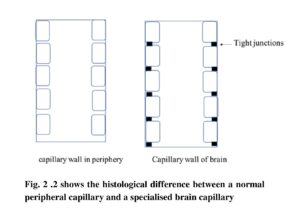
The blood-brain barrier (BBB): The BBB is a physiological border that separates blood and brain and regulates the access of drugs into the brain. It is composed of endothelial cells of the capillary wall, astrocyte sheath, and pericytes. This specialized barrier selectively allows lipid-soluble molecules, water, glucose, amino acids, and other substances to pass through. Tight junctions between endothelial cells prevent harmful substances from entering the brain.
Only lipid-soluble and non-ionized forms of drugs like thiopental sodium. Morphine or diazepam can cross the BBB, while non-lipid-soluble drugs like streptomycin cannot. Dopamine, a tertiary amine compound, cannot cross the BBB. For the treatment of Parkinsonism, instead of dopamine, its prodrug, levodopa (which is lipid soluble), is used.
Fig: 2.1 shows the histological difference between a normal peripheral capillary and a specialised brain capillary (Figures are separately given in PDF)
Placental barrier: separates the placenta from maternal blood. The primary purpose of the barrier is to limit the exchange of toxic molecules from maternal to fetal blood. Lipid-soluble drugs cross the placental barrier, enter the fetal circulation, and produce deleterious effects on the fetus. However, polar substances (d-tubocurarine) or high molecular weight drugs (insulin) are unable to cross the placenta and are considered safe during pregnancy.
Teratogenicity: relates to developmental toxicities or birth defects in newborns when the drug is administered to a pregnant mother. A drug that interferes with the physiological growth of an embryo is called a teratogen. The word “teratogen” originated from the Greek language, meaning monster.
Lipid-soluble, non-ionized, low-molecular-weight compounds cross the placenta, potentially causing birth defects. The teratogenic effect of the drug varies depending on when the drug is taken during pregnancy, from the formation of the blastocyst to the time of birth.
If a woman receives a drug at the earliest stage of pregnancy, i.e. conception, it may lead to miscarriage (Example: Anti-cancer drugs). In the second trimester, congenital anomalies are prominently seen, while developmental disorders appear in the late stage of pregnancy. If a mother receives morphine at the time of labor, it can cause respiratory depression in a baby.
Examples of drugs that produce teratogenicity with birth defects are…
- Thalidomide-phocomelia
- Carbamazepine-neural tube defect
- Valproic acid- spina bifida
- Tetracyclines – yellow staining of teeth and reduced bone growth
- Lithium -cardiac abnormalities
Drug Metabolism:
Biotransformation or Drug Metabolism: The process in which enzyme-mediated chemical changes are observed in a drug. Although the liver is the dominant site for metabolism, other organs such as the kidneys, lungs, GI tract, and blood have been identified as sites of metabolism.
Biotransformation takes place in three ways.
- Synthesis of an active metabolite (dopamine) from an inactive substance (levodopa)
- Synthesis of an active metabolite (Oxazepam) from the active substance (diazepam)
- Synthesis of inactive metabolite (hydroxy-phenytoin) from active substance (phenytoin)
The primary purpose of metabolism is to convert the lipid-soluble, non-ionized form of the drug into a polar, water-soluble compound, which would make it easier to remove from the body via the kidneys or the GI tract. However, prodrugs (pharmacologically inactive compounds) become active only by enzymatic activation. (Levodopa, a prodrug of dopamine, gets converted into dopamine in the CNS by the enzymatic action of DOPA decarboxylase.)
Biotransformation reactions are divided into two-phase reactions.
Phase I reactions (non-synthetic): The reactions primarily modify the chemical structure of the drug through oxidation, reduction, and hydrolysis catalyzed by microsomal enzymes. Addition or exposure of functional groups (-OH, -NH2, -SH, -COOH) leads to the formation of an active or inactive compound. Some examples are paracetamol, adrenaline, amphetamine, phenobarbitone, and so on.
Phase II reactions (synthetic): These are mainly conjugation reactions. This phase detoxifies the drug, catalyzed by non-microsomal enzymes that convert the parent drug or phase I metabolite into a more water-soluble and polar compound. Examples include isoniazid, chloramphenicol, metronidazole, etc.
A drug may undergo a phase I reaction followed by a phase II reaction, but in a few instances, only a phase I or phase II reaction may happen to detoxify the drug.
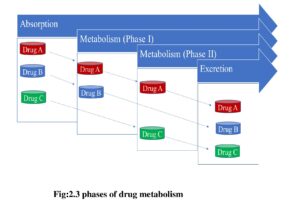
Enzymes in biotransformation: Cytochrome P-450 is the most important enzyme in phase I reactions. Different types of cytochrome enzymes are CYP3A4, CYP3A5, CYP2D6, CYP2C8, CYP2C9, and CYP2C19. More than half of the drugs are metabolized by the first two.
Various enzymes present in the cytoplasm or mitochondria, like UDP-glucuronosyl transferase, sulfotransferase, glutathione transferase, and acetyl transferase, contribute significantly to phase II reactions.
Hofmann elimination: It is a non-enzymatic method of drug elimination where a skeletal muscle relaxant, like atracurium, is spontaneously degraded.
Enzyme induction: Enzyme induction is a slow process that takes 2-3 weeks. When multiple drugs are administered repeatedly, they stimulate smooth endoplasmic reticulum and increase the expression of a specific CYP enzyme. The drug that enhances the activity of the microsomal enzyme is called an inducer. This, in turn, causes accelerated metabolism of the drug, which is co-administered with an inducer, leading to reduced therapeutic efficacy.
For example, drug A (Rifampicin) is co-administered with drug B (Warfarin). Rifampicin is an enzyme inducer that enhances the activity of CYP3A4 and CYP1A2. The activated enzyme accelerates the metabolism of drug B (warfarin), leading to a diminished anticoagulant effect. Similarly, when rifampicin is used with oral contraceptives, it causes contraceptive failure, possibly leading to pregnancy. Other examples of enzyme inducers are phenytoin, phenobarbitone, carbamazepine, etc.
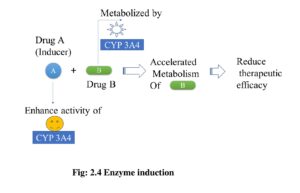
Enzyme induction may also manifest therapeutic benefit.
A beneficial example is the use of phenobarbitone in neonatal jaundice. Phenobarbitone, being an inducer, enhances the activity of glucuronyl transferase, which conjugates more bilirubin and helps in correcting jaundice.
Enzyme inhibition: a decrease in the expression of a specific enzyme in the presence of a particular drug (inhibitor) is called as enzyme inhibition. This process is rapid compared to enzyme induction. The consequences of enzyme induction are cumulative toxicity or prolongation of the action of the drugs that are administered along with an enzyme inhibitor. Drugs that act as an enzyme inhibitor are Cimetidine, Erythromycin, Ketoconazole, Ciprofloxacin, Valproic acid, etc.
Example: Warfarin, when given along with an enzyme inhibitor like erythromycin, leads to bleeding.
Excretion:
Drug Excretion: It is the final step in pharmacokinetics. After the drug has induced its action, the systemically absorbed form of the drug or its metabolite is mainly eliminated from the body through the renal or biliary routes. A drug is also excreted less commonly through feces, skin, lungs, saliva, and milk. The kinetics of elimination is about the rate of elimination of the drug. During the elimination phase, the drug follows first-order, zero-order, or mixed-order kinetics.
Renal excretion occurs through three distinct steps, namely, glomerular filtration, tubular secretion, and tubular reabsorption.
Glomerular filtration: Drugs with a small molecular weight and an unbound form are readily filtered through the glomerulus. An increase in renal blood flow and glomerular filtration rate (GFR) enhances drug filtration. In contrast, drugs with extensive protein-binding properties are non-filtrable through the glomerulus.
Tubular secretion is a non-selective, carrier-mediated, energy-dependent active transport process. Being a non-selective process, always, drugs with molecular similarities compete with each other. When Penicillin and probenecid are prescribed together, probenecid prolongs penicillin action. Both are weak acids and are eliminated by active tubular secretion through the same transport system. Probenecid competes with penicillin for the same transport system, leading to reduced renal clearance and prolongation of the action of penicillin.
Tubular reabsorption: reabsorption of a drug into plasma mainly depends on the degree of ionization, lipid solubility, and pH of tubular fluid. Urinary pH being acidic in nature, basic drugs are eliminated easily. In contrast, the elimination of acidic drugs is delayed because they get ionized in acidic urine. This problem is magnified while treating a patient with an overdose of an acidic drug like aspirin or barbiturate poisoning. In such a scenario, urinary pH is made alkaline by giving sodium bicarbonate so that acidic drugs remain unionized and their elimination is facilitated. Strong acidic and basic drugs are readily excreted, as they do not have an impact on urinary pH.
Biliary excretion: Drug reabsorption is having a major role in biliary excretion. Certain drugs that are excreted in bile enter the GI tract through the second part of the duodenum and may get reabsorbed back into systemic circulation. This is called enterohepatic circulation. Examples- morphine and broad-spectrum antibiotics like tetracycline. Drugs like steroids and digoxin are mainly excreted through bile.
General anesthetics are excreted through the lungs, bromocriptine and ergot derivatives are excreted through breast milk, lithium is excreted in saliva, and griseofulvin is excreted through the skin.
Role of pharmacokinetic parameters in clinical pharmacology:
Plasma half-life: It is the time taken by the drug to reduce the concentration of the drug to half of its original value. It is denoted as the symbol (t1/2) and expressed as a formula given below:
If the (t1/2) of Drug A-100 mg is 2 hours, then in the first 2 hours the concentration of the drug would be 50 mg. Over the next 2 hours, it would be 25 mg, and so on. It takes five half-lives for complete (approximately 97%) elimination of the drug.
The plasma half-life of the drugs mainly depends on the following factors:
- Plasma protein binding: drugs with high plasma protein binding have longer half-lives, as it takes a long time for elimination.
- Clearance: if the rate of clearance is fast, t1/2 is short and vice versa.
- Drug Reservoir: If a drug gets stored in tissues, it prolongs its elimination and thereby plasma- t1/2.
Drugs with shorter half-lives may have a fast onset of action but a short duration of action, hence requiring frequent dosing. On the contrary, a drug with a longer half-life may require once- or twice-daily dosing, which is more convenient.
Some examples of the drugs with Plasma (t1/2):
Drug name | Plasma Half-life |
Adenosine | 10 seconds. |
Oxytocin | 3 to 5 mins. |
Amoxicillin | 2 hours. |
Amiodarone | 15-140 days. |
Clearance: is the ratio of elimination rate to plasma concentration. It is an important Pk parameter that mainly explains how much drug is being eliminated in unit time, i.e. ml/min.
A drug may follow first-order or zero-order kinetics or both. Most of the drugs usually follow first-order kinetics.
First Order Kinetics: A fixed fraction of the drug is eliminated per unit time, so the rate of elimination is directly proportional to plasma concentration.
Zero-order kinetics: a fixed amount of the drug is eliminated per unit time. This process is independent of plasma concentration.
Comparison between first-order kinetics and zero-order kinetics:
Criteria | FOK | ZOK |
Elimination per unit time | Fixed percentage | Fixed amount |
Type of kinetics | Linear kinetics | Non-linear kinetics |
Relationship with plasma half-life | Constant | Variable |
Relationship with CL | Constant | Variable (more with low concentration and vice versa) |
Relationship with plasma concentration | The rate of elimination is directly proportional to plasma concentration | The rate of elimination is not dependent on plasma concentration |
Drugs following kinetics | 95% of drugs | Remaining 5 %, Alcohol, Phenytoin, Aspirin, with high doses. |
Steady-state plasma concentration: The concept of steady state can be explained with (fig:2.4) If we have to fill a water tank with a certain predetermined condition that both the inflow tap and outflow tap will be kept open, and the tank should not be either overflowing or empty, then this is possible only if the water flow in the inflow tap is equal to the outflow tap. This is what happens in a steady-state plasma concentration.
When a drug is administered repeatedly, a point is reached where the rate of absorption is the same as the rate of elimination. This is called the steady-state concentration. To achieve 97% of the steady state, it takes five plasma half-lives.
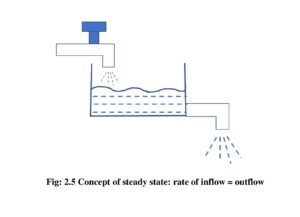
When a drug has a short plasma half-life, it achieves a steady plasma concentration very quickly, but for a drug with a longer half-life, a loading dose of the drug is administered to achieve a steady state. An example of a loading dose is chloroquine.
Histamine, bradykinin and Histamine antagonist
Background: Histamine is a neurotransmitter and neuromodulator that plays a crucial role in hypersensitivity reactions. The German chemists Windaus and Voigt synthesized it in 1907, but it was Sir Henry Dale who explored its pharmacological properties in 1910. It is secreted from the granules of mast cells, as well as from other organs, including the skin, liver, gastrointestinal tract (enterochromaffin cells, intestine), and lungs.
It is released by exocytosis in response to various stimuli, such as chemical or mechanical insults or immunological reactions.
Life cycle of histamine: L-histidine (precursor of histamine) undergoes decarboxylation by the enzyme histidine decarboxylase to form histamine. Histamine, after synthesis, is stored in the granules of mast cells. It is inactive in bound form, but after release, it becomes activated and binds to the histamine receptor to produce a biological response.
Histamine receptors: Four types of histamine receptors have been identified: H1, H2, H3, and H4 receptors.
Activation of H1 receptors triggers an allergic response, while stimulation of H2 receptors leads to gastric acid secretion. H3 receptor regulates neurotransmission, and H4 receptor activation elicits an immunomodulatory response.
Pharmacological Actions:
- Cardiovascular system: stimulation of H1 receptors present in smooth muscles of blood vessels causes a fall in blood pressure as well as an increase in capillary permeability.
- Respiratory system: Bronchoconstriction is mediated through the H1 receptor present in bronchial smooth muscles.
- Gastrointestinal system: Histamine causes contraction of the smooth muscle of the intestine.
- Nerve endings: Stimulation of sensory nerve endings through the H1 receptor produces itching and pain.
Classification:
- First-generation: Promethazine, Doxepin Hydrochloride, Chlorpheniramine Maleate, Meclizine Hydrochloride, and Cyclizine Hydrochloride.
- Second-generation: Cetirizine, Levocetirizine, Loratadine, Desloratadine, Fexofenadine, Ebastine, and Azelastine.
Clinical uses:
- Allergic conditions: H1 antagonists are commonly used in various allergic disorders like anaphylaxis, hay fever, and pruritus to relieve symptoms. Even though adrenaline is the drug of choice in anaphylactic shock, antihistamines like diphenhydramine are administered as adjunct drugs.
- Common cold and cough: Second-generation antihistaminics cetirizine and levocetirizine are used to get rid of the symptoms of the common cold, such as an itchy and running nose and watery eyes.
- Motion Sickness: Promethazine is administered half an hour before the start of the journey to prevent motion-induced vomiting. Its sedative effect makes the journey more comfortable.
- Insect or sting bite: histamine is present in some stinging secretion that causes rash, itching, and swelling at the site of the bite. Antihistaminics reduce swelling and edema in patients with insect bites.
- Preanesthetic medication: Promethazine is used to prevent vomiting and reduce oral and laryngeal secretions.
- Vertigo: It is a common symptom observed in vestibular disorders, and the patient usually feels a sensation of spinning around. Cinnarizine, H1 antagonist, acts as a Ca++ channel blocker that reduces the vasoconstriction caused by released mediators.
Adverse Effects and Toxicity:
- Sedation: Antihistaminic agents promote sleep and diminish the reflex action; hence, they should not be prescribed to drivers and other skilled workers. A second-generation antihistaminics would be a better option among them.
- Other symptoms, such as dryness of the mouth and blurring of vision, were observed due to antimuscarinic effects.
- Patients can experience decreases in alertness, concentration, and coordination.
Toxicity: An accidental or suicidal consumption of antihistaminic agents may cause semiconsciousness or unconsciousness in the patient and may be fatal. Urgent treatment is warranted. An overdose of terfenadine causes tachyarrhythmias. Treatment will be the same as for other overdose drug poisonings.
Commonly prescribed antihistaminic drugs with a dose:
Drug name | Dose with frequency | Special precautions/comments, if any |
Diphenhydramine | 25-50mg | This medication is commonly used in cough syrup. |
Promethazine | 25-50mg | Additional M1 blocking action. Used for motion sickness. |
Chlorpheniramine maleate | 2-4 mg | Commonly prescribed in OPDs. |
Cetirizine | 10 mg | Inhibit the release of cytotoxic mediators from platelets and eosinophils. It serves as an adjuvant in the treatment of seasonal asthma. |
Levocetirizine | 5 mg | Half of the cetirizine dose exhibits an antihistaminic effect. |
Desloratadine | 5mg | Added anti-inflammatory action. |
Rupatadine | It also exhibits PAF antagonist activity. Used in chronic urticaria and allergic rhinitis. | |
Azelastine | 0.1% | Has additional bronchodilator properties. It is preferred as a nasal spray for seasonal allergic rhinitis. |
Fexofenadine | 120 mg/180 mg | No QT prolongation, free from anticholinergic effect and poor CNS penetration. |
Difference between first-generation and second-generation anti-histaminics:
Differentiating features | First generation anti-histaminics | Second generation anti-histaminics |
Receptor selectivity | Blocks H1 as well as muscarinic receptors. | More H1 selectivity and no muscarinic action. |
Effect on CNS | More sedation (+++)/ | Minimal sedative effect. |
Mechanism of action | Histamine and muscarinic antagonist. | In addition to H1 blockade, inhibit release of various inflammatory mediators such as leukotrienes, cytokines and platelet-activating factors. |
Therapeutic advantage | Useful in patients with additional muscarinic activity. Example: motion sickness, vertigo. | The non-sedative properties of the drug make it suitable for certain occupations, such as drivers or machine operators. |
Concomitant use of other CNS depressants | Induce additional CNS depression in alcoholics and those who are on sedatives. | Do not produce any additive effect. |
Therapeutic uses | Wide spectrum attributed due to antihistaminic and antimuscarinic properties. They are used in varied disorders such as angioneurotic oedema, common cold, motion sickness, pruritus, insect stings and bites, vertigo, parkinsonism, etc. | Limited spectrum due to H1-specific action. They are preferred agents in urticaria, eczema, allergic rhinitis, allergic conjunctivitis, bronchial asthma, etc. |
Drugs commonly used | Diphenhydramine, promethazine, pheniramine, and cinnarizine. | Cetirizine, levocetirizine, fexofenadine, and loratadine. |
Use with children. | Not recommended, as it diminishes school performance. | Safe for children. Recommended in the form of syrup and chewable tablets. |
Use in the elderly | Not recommended due to reduced cognitive function. | Can be used without dose alteration. |
Adverse effects | Sedation that may interfere with daytime activities, loss of appetite, and GI distress. | Minimal/No sedation |
Anticholinergic effect: dry mouth, urinary retention, and dysuria. | Not seen any action on muscarinic receptors. |
Prostaglandins
Introduction: Eicosanoids are unsaturated fatty acids having 20 carbon atoms derived from the activation of membrane phospholipids. The word “eicosanoids” originated from the Greek language, where “eicosi” means 20. Various subfamilies of eicosanoids have been described, such as prostaglandins (PGs), thromboxanes, and leukotrienes.
In the year 1930, American gynecologists Kurzrok & Lieb noticed contraction of the uterine endometrium when exposed to human semen. Von Euler in 1935 identified a lipid-soluble substance with similar pharmacological properties and named it prostaglandin, assuming that it was secreted from the prostate gland. The name was a misnomer, as later it was observed that prostaglandins are not only present in the prostate but also in other tissues of the human body.
Prostanoid receptors: PGs have varied actions on the human body due to their interactions with specific receptors. The five natural PGs, namely PGE2, PGI2, TXA2, PGD2, and PGF2α, produce their pharmacological actions by activation of EP, IP, TP, DP, and FP receptors, respectively.
Pharmacological actions of PGs: Different prostaglandins produce varied pharmacological effects on tissues.
Cardiovascular System: PGE2, PGD2, and PGI2 elicit vasodilator responses resulting in a fall in blood pressure, while TXA2 is a potent vasoconstrictor. PGE2 induces predominant action on smooth muscles of the ductus arteriosus, thereby helping in maintaining the patency of the ductus arteriosus till birth.
Platelets: Counterbalancing action: TXA2 (promotes platelet aggregation) and PGI2 (inhibits platelet aggregation).
Bronchial & Tracheal smooth muscle: PGE2 & PGI2 cause relaxation of bronchial smooth muscles, while PGF2α and TXA2 cause bronchoconstriction.
Uterus: PGF2α and TXA2 cause uterine contraction (dose-dependent action), while PGI2 and high concentrations of PGE2 are responsible for relaxation of the uterus.
Male reproductive system: The quantity of PGE2 is very high in fertile semen. It causes relaxation of the smooth muscles of the penis, leading to penile erection.
Gastrointestinal system: PGI2 and PGE2 have a gastric cytoprotective effect, as they inhibit gastric acid secretion, improve gastric mucosal blood flow, & increase mucus production. This ulcer-protective effect is lost with the use of certain NSAIDs.
Kidney: PGE2 and PGI2 act as renal vasodilators, producing natriuresis, diuresis, and kaliuresis. TXA2 produces opposite action with renal vasoconstriction and antidiuresis.
Eye: low concentration of PGF2α reduces IOP by increasing aqueous humor drainage predominantly by increasing uveoscleral outflow.
Inflammation: there is a clear-cut association between COX II and inflammation. PGE1 and PGE2 play major roles in inducing inflammation & fever.
Central Nervous System: The hypothalamus regulates body temperature. Various endogenous pyrogens (interferons, IL-1β, IL-6, and TNF-α) induce the COX-II enzyme to synthesize PGE2, which plays a major role in the induction of fever.
Therapeutic uses of prostaglandins:
- Obstetrics & Gynecological Indications: The three main obstetrics indications of PGs are
Termination of Pregnancy
Induction of labour &
Prevention of postpartum hemorrhage (PPH).
Prostaglandin type | Uses |
Intravaginal Dinoprostone (PGE2) | Termination of pregnancy and induction of labor in full-term women. |
Intra-amniotic instillation of Carboprost (PGF2α) | Abortion in the second trimester. |
oral misoprostol (PGE2 analogue) | Emergency contraception. (within 72 hours of coitus). |
2. Cardiovascular indications: Epoprostenol (PGI2 derivative) is used to treat pulmonary hypertension, as it reduces pulmonary arterial resistance.
For a patient with pulmonary stenosis undergoing repair surgery, the ductus arteriosus must remain patent. IV infusions of derivatives of PGE2 and PGI2 keep the ductus arteriosus patent before surgery.
3. Ophthalmic indications: Prostaglandin analogues such as latanoprost, bimatoprost, and travoprost are the drugs of choice for patients with glaucoma. Instillation of PG eye drops reduces IOT by increasing the drainage of aqueous humor outflow.
4. Gastrointestinal indications: PPI and H2 blockers are effective agents for the treatment of peptic ulcers. The ulcer-protective property of misoprostol (PGE1 derivative) has been proven to be useful in the treatment of NSAID-induced peptic ulcers.
5. Miscellaneous indications: Alprostadil (PGE1 derivative) is used as an alternative to sildenafil for the treatment of erectile dysfunction. Intracavernosal injection of alprostadil causes an erection of the penis for 1-2 hours.
PGE2 derivative is used during dialysis to prevent platelet aggregation.
Adverse effects of PGs: prostaglandin side effects vary with dose & route. Common side effects experienced by patients are nausea, vomiting, diarrhea with abdominal cramps, and fever.
Nonsteroidal Anti-inflammatory Drugs
Nonsteroidal anti-inflammatory drugs (NSAIDs) are primarily used in the treatment of inflammation, fever & pain. These drugs induce their action by inhibiting the cyclo-oxygenase enzyme (COX) and thereby preventing prostaglandin synthesis.
Inflammation: the development of an inflammatory response is a protective mechanism of the body. It is characterized by fever, redness, pain & swelling due to the release of prostaglandins. (PGE2 & PGI2)
Pain: Pain is an unpleasant, unwanted, sensory response to tissue injury. The nociceptors are activated by different stimuli like extreme heat or cold, chemicals (exposure to H+ ions and bradykinin), or pressure injury. Peripheral sensitization of pain is mainly due to PGE2 and PGI2; hence, inhibition of PGE2 and PGI2 is a therapeutic strategy in pain management.
Fever: The hypothalamus regulates body temperature. Balance between heat production & heat loss is disrupted in a patient with fever & inflammation. PGE2 acts on thermostatic neurons to trigger the thermal response; hence, inhibitors of prostaglandins are used as antipyretic agents.
History: The use of willow bark for fever treatment dates back to 1963, subsequently leading to the discovery of salicin. Salicylate was used to treat rheumatic fever and gout in 1874. Salicylate was a toxic compound, so various attempts were made to reduce its toxic effects. In the process, aspirin was discovered in 1899 as a promising NSAID after confirming its safety & efficacy in animal & human studies.
Classification:
- Non-selective COX inhibitors:
- Salicylates: Aspirin.
- Propionic acid derivatives: Ibuprofen, Ketoprofen.
- Acetic acid derivatives: Diclofenac sodium, Aceclofenac sodium, and Ketorolac.
- Para-aminophenol derivatives: Paracetamol.
- Indole derivatives: Indomethacin, Sulindac.
- Enolic acid derivative: Piroxicam, tenoxicam.
- Fenamates: Mefenamic acid.
- Selective COX II inhibitors:
- Coxibs: Celecoxib, parecoxib, and etoricoxib.
- Non-Coxibs: Nimesulide, Meloxicam, Etodolac
- Miscellaneous drugs: Nefopam, Diacerin.
Aspirin (as a prototype drug):
It is an ester of acetic acid used as an analgesic, anti-inflammatory, and antipyretic agent. It was discovered by Felix Hoffman in 1897.
Mechanism of action:
Aspirin is an irreversible inhibitor of the cyclooxygenase enzyme & prevents prostaglandin synthesis. It also inhibits cyclooxygenase I in platelets and prevents platelet aggregation (antiplatelet action). In addition, salicylates inhibit antigen-antibody production & aggregation. (Anti-inflammatory action)
Pharmacological actions:
- Analgesic action: NSAIDs produce an analgesic effect against somatic & integumental pain arising from skin, muscles, connective tissue & joints. They are also effective in various inflammatory disorders. In general, NSAIDs relieve mild to moderate pain (headache, body ache, backache, toothache, ear & eye pain). These drugs also reduce postoperative & spasmodic pain.
- Antipyretic action: The key function of the hypothalamus is to keep a balance between heat generation & heat utilization. The onset of a febrile episode is due to the disruption of this equilibrium and the raised PGE2 levels. The antipyretic effect of NSAIDs is due to inhibition of PGE2.
- Anti-inflammatory action: During inflammation, there is the release of different types of mediators, including prostaglandins, by activating the cyclooxygenase enzyme. NSAIDs not only inhibit the cyclooxygenase pathway but also diminish the further process of inflammation.
ADME:
Aspirin is commonly available as an enteric-coated tablet with maximum absorption from the ileum. It crosses the placental barrier and binds to plasma proteins. It is metabolized by conjugation and follows dual kinetics of elimination (with low doses following first-order kinetics and with high doses zero-order kinetics).
Therapeutic uses:
- Analgesic use: an adult dose of Aspirin is 300-600 mg every 6 hours, used as a painkiller medicine in a patient with dysmenorrhea, toothache, myalgia, etc.
- Anti-inflammatory use: The anti-inflammatory dose of aspirin in a patient with rheumatoid arthritis, ankylosing spondylitis, or gout is 2-4 g/day.
- As an antiplatelet agent: Low-dose aspirin (75 mg/day) is used as an antiplatelet agent in patients with acute coronary syndrome, ischemic stroke, and patients with CABG.
- Specific uses: Aspirin and indomethacin are used in the treatment of patent ductus arteriosus. It is also considered to be the first drug of choice in acute rheumatic fever.
- Miscellaneous uses: Aspirin is also used for the prevention of colonic and rectal cancer. It also reduces the progression of cataracts and is indicated in pre-eclampsia.
Adverse effects:
- Gastric mucosal damage—Aspirin use may cause dyspepsia and epigastric upset. Aspirin-induced hematemesis is not uncommon with high doses (3-4 g/day) of aspirin. Prostaglandins perform a housekeeping function in our body. PGE2 and PGI2 inhibit gastric secretion, stimulate bicarbonate formation, and dilate mucosal blood vessels. Aspirin, by inhibiting COX, nullifies the gastroprotective effect, thereby inducing gastric mucosal ulceration.
- High doses of aspirin cause an increase in O₂ and CO₂ production, leading to “respiratory alkalosis.”
- Long-term use of aspirin causes increased bleeding tendencies.
- Anaphylactoid reactions causing bronchial asthma and rashes are associated with aspirin users.
- Analgesic nephropathy on chronic use.
- Reye’s syndrome: it is observed in children < 12 years old who received aspirin for treatment of febrile illness and is marked by liver injury and encephalopathy.
- Acute salicylism (tinnitus, vertigo, decreased hearing) or salicylate poisoning is commonly observed in children and is life-threatening.
Acute salicylate poisoning:
Acute toxicity is commonly seen in children with doses higher than 20 g/day. The patient usually presents with vomiting, dehydration, and acid-base imbalance.
Treatment includes:
- Gastric lavage with activated charcoal.
- Alkalinization of urine using sodium bicarbonate.
- Supportive management.
- Hemodialysis in resistant cases.
Drug-drug interactions:
Drugs used in combination | Outcome |
Aspirin + Diuretics | Decrease diuretic action (PG-mild diuretic action). |
Aspirin + ACE inhibitors | Decrease antihypertensive effect (PG-vasodilatory effect). |
Aspirin + Corticosteroids | Increase risk of GI side effects (gastroprotective effect lost). |
Aspirin + Anticoagulants | Increase risk of bleeding. |
Aspirin + Warfarin | Bleeding-displacement reaction due to protein binding. |
Aspirin + Lithium | Lithium toxicity. |
Paracetamol:
Paracetamol is the first-choice analgesic and antipyretic agent, as it has a relatively lower risk of adverse effects. It is an OTC (over-the-counter) drug used as a household remedy. It is combined with analgesics, caffeine, cough syrup medication, and common cold preparations.
Mechanism of action:
Paracetamol suppresses PG synthesis by inhibiting the COX enzyme. It has been noted in the evidence that paracetamol inhibits the COX III enzyme present in the brain, which is specific to the generation of pain and the induction of fever.
ADME: The oral route exhibits exceptional bioavailability, achieving peak concentration within one hour. The t₁/₂ of the drug is 2 hours, and it is predominantly metabolized by conjugation with glucuronic acid. A small amount of the drug is metabolized to the toxic compound NAPQI (N-acetyl-p-benzoquinone imine), which is normally neutralized by glutathione. In overdose (>10 g/day), the protective mechanism is lost, leading to hepatocellular injury.
Therapeutic uses:
- It has excellent analgesic and antipyretic properties, hence it is preferred in the treatment of pyrexia and common painful conditions like body ache, backache, and headache. It can be used in pregnancy and lactation and has no restrictions in the pediatric and geriatric populations.
- Paracetamol, combined with caffeine and antihistaminic drugs, is used for the common cold.
- Though having poor anti-inflammatory action, it is prescribed for osteoarthritis.
- It is the preferred alternative analgesic in patients for whom aspirin is contraindicated. (Pregnant women, patients with peptic ulcer disorder and children less than 12 years presented with fever.)
- Paracetamol is indicated for migraine headaches.
Adverse effects: Paracetamol is the safest drug among all NSAIDs. However, liver toxicity at higher doses has been observed.
Acute paracetamol poisoning:
In normal adults, a single dose of > 10 g per day is likely to cause hepatic toxicity, and doses > 20 g/day could be fatal. Acute intoxication, even with a lesser than toxic dose, may result in malnourished individuals, HIV-infected patients, chronic alcoholics, patients with poor liver function, and children who cannot conjugate the toxic metabolite NAPQI. Patients on concomitant use of carbamazepine or phenytoin have an increased risk of paracetamol toxicity.
Clinical symptoms: The patient presents with the initial symptoms of nausea, vomiting, and abdominal pain within a couple of days, followed by tender hepatomegaly, the appearance of jaundice, and the development of coagulopathy.
Mechanism of hepatic toxicity:
In an adult with a normal dose of paracetamol (500-650 mg four times a day), the majority of paracetamol is metabolized by glucuronide or sulfate conjugation. A small amount of the drug gets metabolized by the CYP-450 enzyme through a minor pathway, generating NAPQI, a toxic metabolite, that is detoxified by the glutathione conjugation reaction. With a higher dose of paracetamol, a higher quantity of toxic metabolite is generated, which is not neutralized by the body due to depletion of glutathione, causing hepatocellular toxicity.
Treatment:
- Gastric lavage.
- Activated charcoal (Useful when the patient visits the hospital within one hour of ingestion.)
- Supportive therapy includes IV fluids, treatment of coma, and treatment of hypoglycemia.
- Specific antidote: N-acetyl cysteine (loading dose—150 mg/kg, followed by 50 mg/kg for 6-8 hours, followed by 100 mg/kg for 16 hours). Discontinue it when serum paracetamol is in the therapeutic range and the PT/INR report is normal.
Diclofenac Sodium:
It is a phenylacetic acid derivative, used systemically and locally, and is a commonly prescribed NSAID among all NSAIDs as an analgesic and anti-inflammatory agent.
Mechanism of action:
The primary mechanism is reversible inhibition of the cyclooxygenase (COX) enzyme, with higher selectivity for COX II. It also reduces the arachidonic acid concentration in leukocytes.
ADME:
It has high first-pass metabolism and high protein-binding property. Despite a short t1/2, its action is prolonged due to its preferential sequestration and sustenance of the drug in synovial fluid.
Therapeutic uses:
A: Systemic use
- As an anti-inflammatory agent: The signs and symptoms of rheumatoid arthritis, osteoarthritis, and ankylosing spondylitis are effectively alleviated by diclofenac sodium. To exhibit a faster onset and provide sustained action, oral preparations are available as immediate-release, sustained-release, or extended-release forms.
- As an analgesic agent: Parenteral administration of diclofenac alleviates pain in patients with primary dysmenorrhea and renal colic. It is equally effective in producing analgesia in postoperative pain. Diclofenac suppositories are used to alleviate pain caused by hemorrhoids.
- Topical use: for topical application, diclofenac is available as ointment, liniment, gel and transdermal form
B. Topical use
- Topical applications are used to relieve pain due to minor strains, sprains, and bruises.
- Diclofenac spray is preferred for sports injuries.
Adverse effects:
- GI side effects: 1/5th of diclofenac users suffer from nausea, vomiting, and dyspepsia.
- High cardiovascular risk: being more selective in COX II action increases cardiac risk in preexisting heart disorders.
- Dermatological reactions: Common and mild cutaneous reactions include rash, itching, and photosensitivity. Severe forms such as Stevens-Johnson’s syndrome and exfoliative dermatitis may manifest on rare occasions.
- Hepatic injury: elevation of ALT and AST is seen in 15% of individuals; regular LFT is mandatory in patients who are on chronic diclofenac therapy.
COXIBs:
Selective COX II inhibitors are named as COXIBS. Examples include Celecoxib, Rofecoxib, Valdecoxib, Parecoxib, and Etoricoxib. They have similar actions to traditional NSAIDs but produce minimal GI side effects.
Advantages of COXIBS.
- Superior GI safety as compared to other NSAIDs.
- Better clinical profile in inflammatory disorders, as they selectively inhibit COX II, which is induced at the site of inflammation.
- Simplified dosing due to longer plasma half-life.
- Do not have antiplatelet action, hence no bleeding.
- Does not produce bronchoconstriction.
Disadvantages of COXIBS:
- Increased risk of cardiovascular thrombosis.
- Induces renal toxicity compared to traditional drugs used for pain and analgesia
Clinical Status of COXIBS:
Drug Name | ADME | Therapeutic uses | Caution in use |
Celecoxib: Discovered in 1998. | Extensive plasma protein binding with a plasma half-life of 11 hours | Indicated in inflammatory disorders: juvenile arthritis, rheumatoid arthritis, osteoarthritis, and ankylosing spondylitis. | Considering cardiovascular risk, it should be used for a brief period with a minimal effective dose. |
Etoricoxib: Maximum COX II selective action | It has a plasma half-life of 24 hours and gets fully metabolized before excretion. | Used in inflammatory disorders and for short-term treatment of musculoskeletal pain | Better to avoid in patients with liver disorders. |
Parecoxib | Parenteral use is preferred. | Used in the short-term treatment of musculoskeletal pain and postoperative pain. | Should not be used in liver diseases. |
Rofecoxib and Valdecoxib | ——- | Banned due to high risk of myocardial infarction. | ——- |
Nimesulide:
Nimesulide acts by multiple mechanisms: in addition to COX inhibition, it inhibits free radicals (superoxides) at the inflammatory site and reduces proinflammatory mediators. It causes severe hepatic toxicity and is hence banned.
Ketorolac:
Ketorolac is an aryl acetic acid derivative, a non-selective reversible COX inhibitor having potent analgesic and moderate anti-inflammatory properties.
Mechanism of action: Ketorolac acts by inhibiting PG synthesis. It also inhibits platelet aggregation.
Pharmacokinetics: It is administered through the systemic (oral and parenteral) and local routes (nasal and eye drops). After oral administration, 99% of the drug binds to plasma proteins, and bioavailability nears 80%. Its excretion is reduced in renal failure and elderly individuals.
Therapeutic uses:
- Postoperative pain: Ketorolac is administered IM or IV in surgical patients to alleviate pain. Its use, along with morphine in severe pain, reduces the requirement of morphine.
- Bone pain: It is used in patients having pain due to metastasis in the bone.
- Dental pain: Ketorolac is preferred for a toothache due to an impacted tooth or pain after tooth extraction.
- Spasmodic and muscular pain: Acute musculoskeletal pain and renal colic are treated with IM ketorolac, which provides adequate pain relief and good patient satisfaction.
- Topical ketorolac is used in painful eye conditions such as allergic conjunctivitis and post-cataract surgical pain.
- It is also considered in migraine headaches and severe dysmenorrhea.
Adverse effects and contraindications:
- Patients on a normal dose of ketorolac develop nausea and dyspepsia and have an increased risk of peptic ulceration.
- The patient may experience pain at the site of injection.
- Some patients may develop rash and pruritus after use of ketorolac.
- There are reports of an increase in transaminase levels and retention of fluid.
Drug-drug interaction:
Drugs | Outcome |
Ketorolac + Aceclofenac | Enhanced NSAID toxicity. |
Ketorolac + anticoagulants | Increase the chances of bleeding. |
Ketorolac + Acebutolol | Decrease in the antihypertensive effect of acebutolol. |
copyright@shantaspharmacology.in